— Nonlinear Platform Development
Professional Phrenology &
Physiognomics Analysis
An AI-powered computer vision system for cranial morphology analysis and facial feature assessment — combining historical phrenological mapping with modern deep learning, 3D mesh reconstruction, and multi-AI report generation for educational and research purposes.
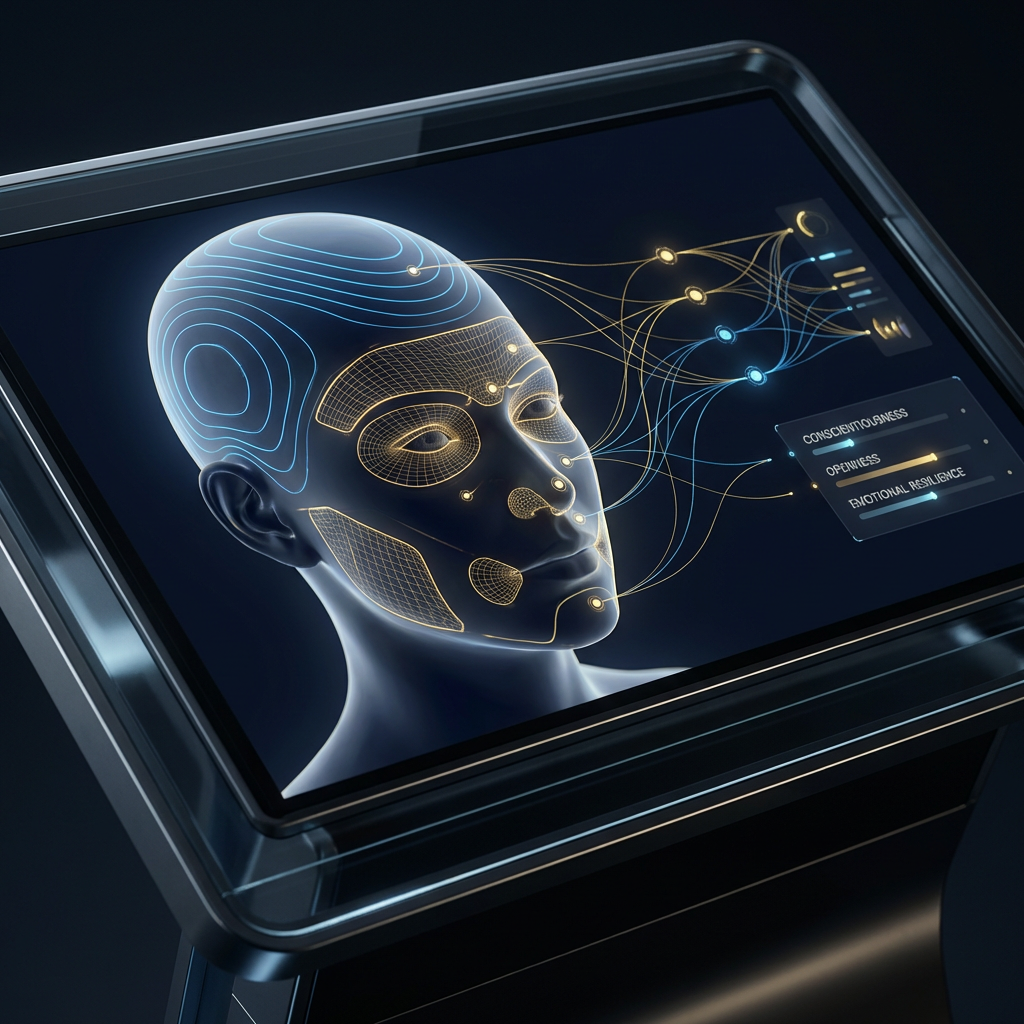
The Problem
Historical Sciences Lack Modern Tools.
Research Demands Digital Analysis.
Research Method Distribution
Feature Detection Accuracy by Approach
Manual Limitations
Traditional craniometric measurement requires physical instruments, trained operators, and significant time per subject. Digital alternatives using computer vision can process images in seconds with greater consistency.
Lost Historical Context
Phrenology's historical significance in the development of neuroscience is poorly documented in digital form. Researchers lack tools that map historical phrenological systems onto modern anatomical understanding.
Research Tool Gap
No existing platform combines facial landmark detection, cranial morphology analysis, historical phrenological organ mapping, and AI-generated interpretive reports in a single research environment.
The Solution
Phrenology & Physiognomics:
AI-Powered Cranial Analysis Platform
A comprehensive computer vision platform that performs facial landmark detection, cranial morphology measurement, historical phrenological organ mapping, and physiognomic feature assessment — generating detailed AI reports combining historical interpretation with modern scientific context.
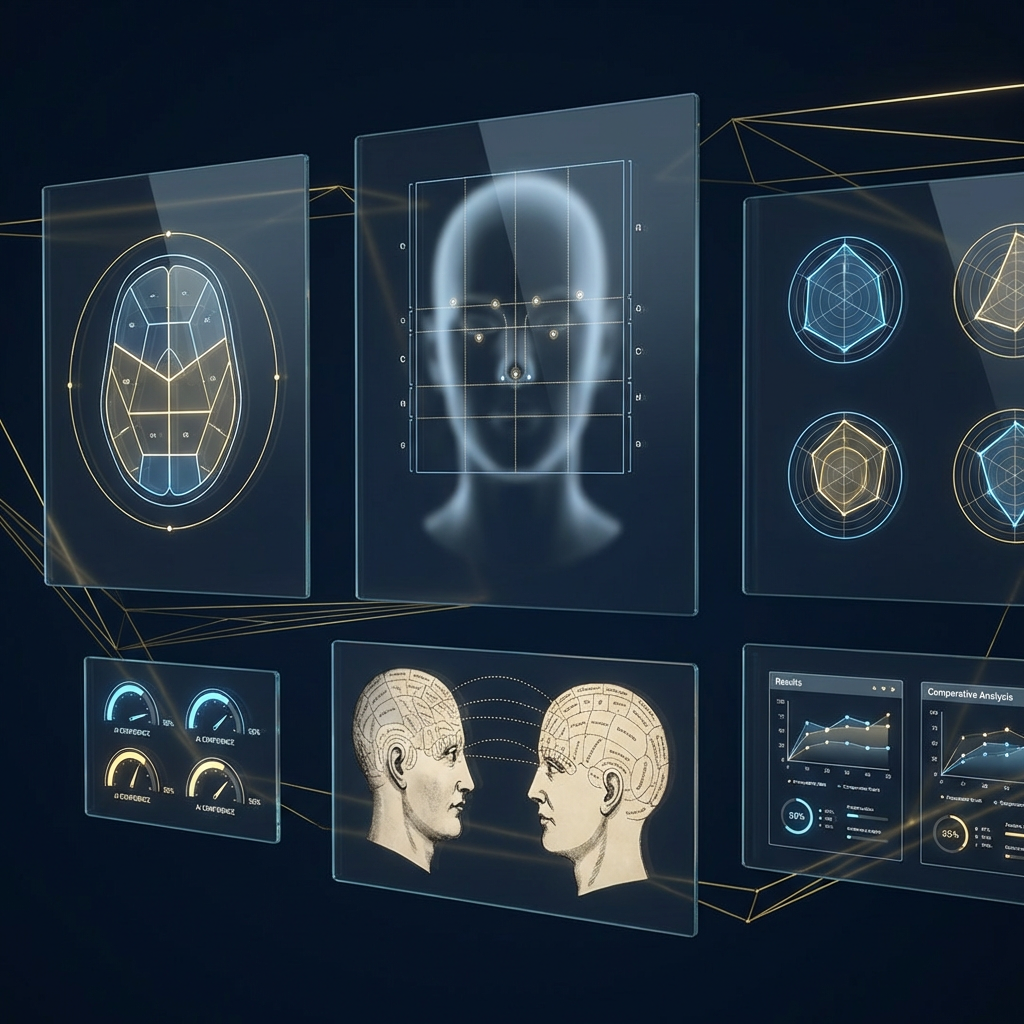
Cranial Morphology Analysis
Advanced computer vision algorithms detect and measure cranial proportions, including frontal prominence, parietal width, occipital curvature, and temporal regions — mapped against historical phrenological organ charts from Gall and Spurzheim's original system.
Facial Landmark Detection
468-point facial mesh detection using MediaPipe FaceMesh provides sub-millimetre accuracy for facial feature measurement. Detects eye spacing, nose bridge angles, jawline geometry, and forehead proportions in real-time.
Historical Organ Mapping
Complete digitisation of all 43 phrenological organs from the classical Gall–Spurzheim system — including the affective, intellectual and reflective faculties — each mapped to precise cranial regions with interactive click-through visualisation. Historical claims are presented strictly for educational use.
uctiveness, and more — mapped onto detected cranial geometry.Craniometric Measurements
Automated calculation of cephalic index, facial index, nasal index and orbital measurements, plus the full 11-measurement Bertillon anthropometric protocol and standardised Martin & Saller/Howells landmarks. Outputs are comparable with historical craniometric databases and modern forensic-anthropology references.
ses for research purposes.Multi-AI Report Generation
Generates comprehensive analysis reports through multiple AI models — combining historical phrenological interpretation with modern neuroscientific context, clearly distinguishing historical claims from current scientific understanding.
Privacy-First Design
All image processing runs entirely in-browser using WebAssembly and TensorFlow.js. No facial data is transmitted to external servers. Images are processed locally and can be discarded immediately after analysis.
The Architecture
How It Works:
From Image to Analysis Report
Image Capture
Capture data through four channels: webcam with OpenCV.js processing, manual caliper entry, uploaded photographs, or LiDAR 3D head scans (STL/OBJ/PLY/3MF from iPhone Pro, iPad Pro and Android ToF devices). A structured 8-angle protocol ensures reproducible coverage. Video uploads are auto-sampled into key frames and batch-processed.
l geometry.Feature Detection
MediaPipe FaceMesh identifies 468 facial landmarks. Custom models extend detection to cranial contours, hairline geometry, and neck-skull junction points for complete morphological mapping.
Phrenological Mapping
Detected cranial geometry is mapped against the complete 43-organ phrenological system. Each organ zone receives a prominence score based on local curvature analysis and proportional distribution. An interactive phrenology head-map visualises scores, and subjects can be compared against a 200+ historical-figure database with documented craniometric profiles.
l measurement.AI Report Generation
Multi-AI engine generates detailed reports combining phrenological organ interpretations, physiognomic feature analysis, historical context, and modern scientific commentary — with full educational disclaimers.
Who It Serves
Built for Research & Education
History of Science Researchers
Study phrenology's role in the development of neuroscience and psychology with digital tools that map historical systems onto modern anatomical understanding.
Physical Anthropologists
Automated craniometric measurements provide standardised data for comparative studies — replacing manual calipers with computer vision precision.
University Educators
Interactive teaching tool for courses on history of science, pseudoscience, and the evolution of brain mapping — demonstrating both historical claims and their scientific debunking.
Museum & Exhibition Designers
Create interactive phrenology exhibits that combine historical authenticity with modern scientific context — engaging visitors through hands-on AI-powered analysis experiences.
Analysis Processing Speed (Images per Minute)
SaaS Subscription:
Historical Analysis, Modern Precision
- Basic facial landmark detection
- 5 phrenological organs
- Standard report
- Image upload only
- Email support
- Full 468-point detection
- All 35 organs mapped
- Multi-AI reports
- Live camera analysis
- PDF export
- Priority support
Get Started
Ready to Explore Phrenological Analysis?
Contact our team to schedule a demo, discuss licensing options, or request a detailed platform overview.
Get in Touch