AI Voice Biomarker Analysis — Psycho-Emotional Research Platform

Your Voice Carries
Every Secret
Your Mind Holds

A cutting-edge computational platform for comprehensive psychiatric, psycho-emotional, biochemical, and nutritional voice analysis — leveraging 2048-point FFT signal processing, real-time EEG simulation, and multi-AI synthesis across 60+ DSM-5 conditions.
60+ DSM-5 Conditions EEG Simulation Neurotransmitter Profiling Drug Matching Multi-AI Synthesis 30+ Languages
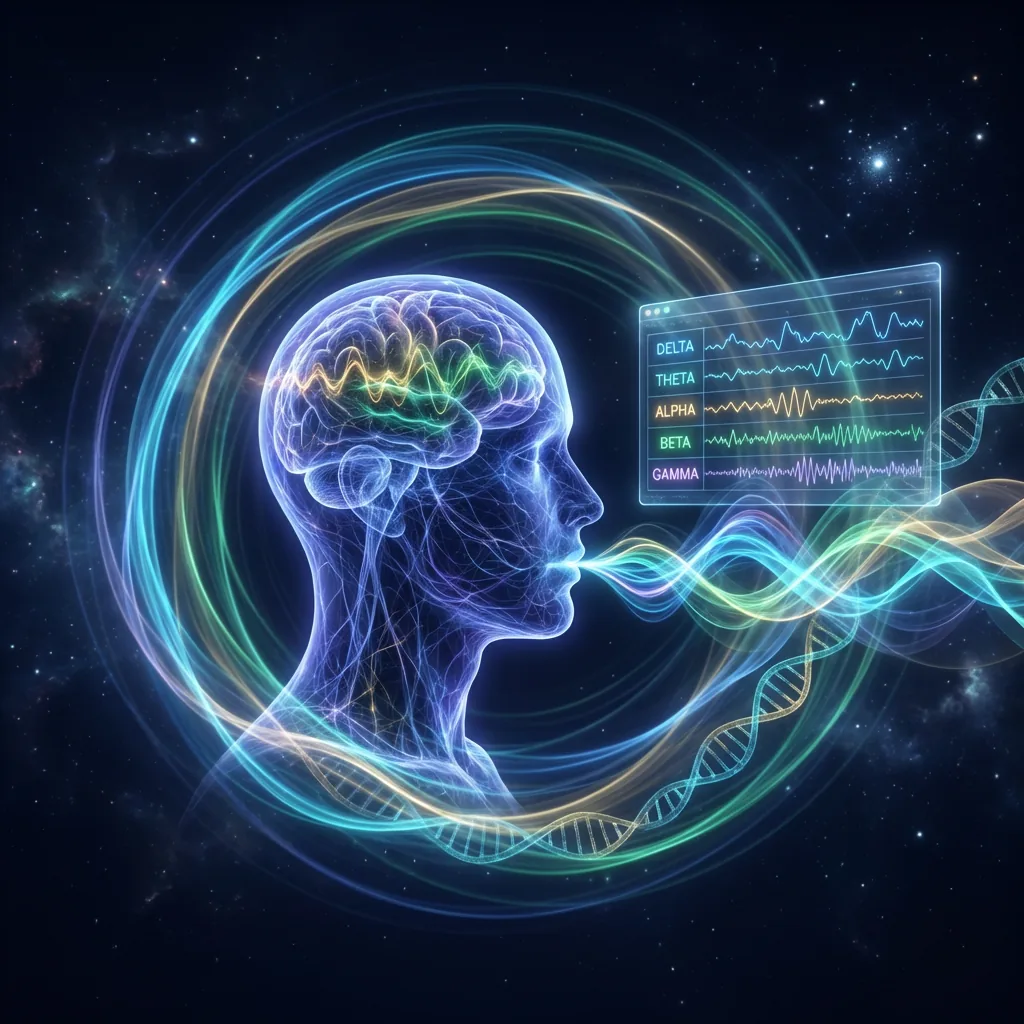
Psychiatric Voice Analyzer with neural pathways, EEG frequency visualization and spectral waveform analysis
60+
DSM-5 Conditions Profiled
10
Analysis Modules
35+
Biochemical Markers
30+
Languages Supported
Platform Overview

Voice as a Window Into the Psyche

The Psychiatric Voice Analyzer is an experimental research platform that treats the human voice as a rich biomarker stream — a non-invasive window into neurological, psychological, and biochemical states. Every phoneme, fundamental frequency shift, jitter, shimmer, and spectral entropy fluctuation encodes information about the brain's current operational state.

The platform applies advanced computational neuroscience techniques — including 2048-point Fast Fourier Transform analysis, Monte Carlo simulation with importance sampling, and multi-layered DSM-5 symptom-weight scoring — to extract 15+ vocal features and map them across psychiatric, psycho-emotional, biochemical, and nutritional dimensions simultaneously.

A built-in multi-AI synthesis engine integrates findings from all modules and generates a holistic diagnostic narrative in natural language, supported by Cerebras (gpt-oss-120b), OpenAI GPT-4/GPT-5, or user-configured API keys.
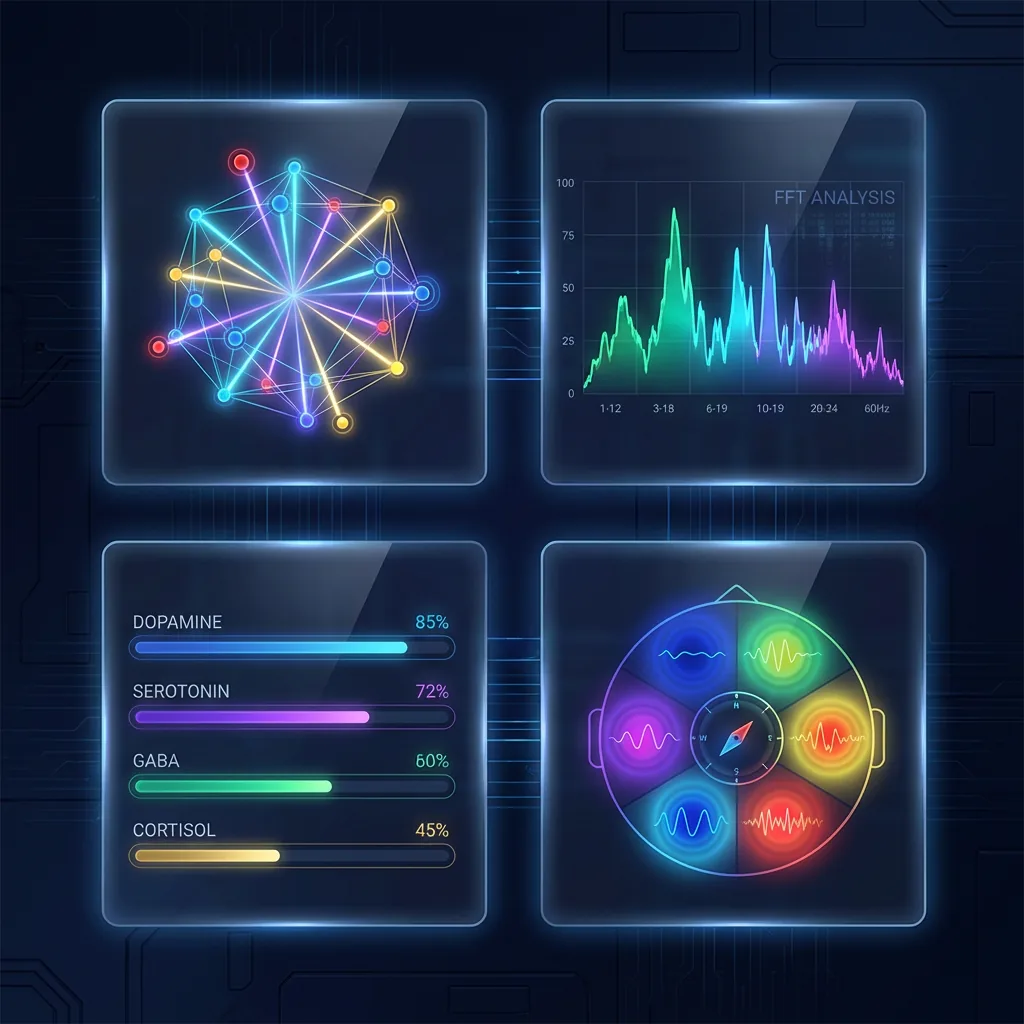
Psychiatric Voice Analyzer dashboard with polyhedron visualization, FFT spectrum, neurotransmitter chart, and EEG brain map
Voice-Mapped EEG Simulation

Five Brainwave States, Decoded from Your Voice

Mathematical mapping of vocal frequency components to the five canonical EEG brainwave bands, providing a real-time non-invasive estimate of dominant neural state.

0.5–4 Hz
Delta
Deep sleep, unconscious processing, immune restoration, high slow-wave presence indicating potential depressive or dissociative states.
4–8 Hz
Theta
Hypnagogic state, memory consolidation, creative insight, emotional processing. Elevated in anxiety, PTSD, and trauma-related conditions.
8–13 Hz
Alpha
Relaxed wakefulness, attentional readiness, integration state. Alpha/Beta ratio provides the core calm-stress index in the platform.
13–30 Hz
Beta
Active cognition, focused attention, problem-solving. Excess beta correlates with anxiety, rumination, OCD patterns and cortisol elevation.
30–100 Hz
Gamma
Cross-modal binding, peak cognitive performance, consciousness integration. Dysregulation linked to schizophrenia spectrum and sensory disorders.
10 Integrated Analysis Modules

From Raw Signal to Clinical Narrative

The platform's ten interconnected modules process voice data at progressively deeper levels of abstraction — from raw acoustic signal to integrated AI-synthesized diagnostic insight.

# Module Core Function Type
01 Advanced Audio Signal Processing 2048-point FFT, 15+ vocal feature extraction (F0, jitter, shimmer, HNR), SNR estimation, VAD, spectral centroid, entropy. Supports microphone, browser-tab capture, and file upload (WAV, MP3, OGG, M4A, FLAC). Core
02 Voice-Mapped EEG Simulation Maps vocal frequency components to Delta, Theta, Alpha, Beta, and Gamma bands. Calculates real-time attention and meditation state indices from Alpha/Beta ratios with median filtering for stable dominant-state detection. Core
03 Psychiatric Voice Visualization Multi-layered radial visualization with real-time morphing polyhedra. Central DSM-5 disorder polyhedron with dynamic red/yellow/blue color-coding (>70%/40–70%/<40% resonance). Interactive pan, zoom, and touch controls. Core
04 Psychoemotional Voice Analysis Primary emotion detection and intensity measurement (joy, sadness, anger, fear, surprise, disgust). Stress level calculation from vocal tension markers. Congruence analysis measuring alignment between emotional state and expression. Core
05 Enhanced Psychiatric Resonance Comprehensive DSM-5 profiling across 60+ conditions using threshold-based scoring algorithms. Temporal consistency, trend, and cyclicality analysis. Confidence scoring based on signal quality and data duration. Advanced
06 Psychiatry NLS Resonance Symptom-based analysis mapping voice features to 35+ clinical symptoms. DSM-Coherence Index (DCI) with adjustable symptom weightings. Monte Carlo simulation with importance sampling. Color therapy frequency recommendations. Experimental
07 Psychiatric Drug Matching (P-DM) Voice-based pharmacological profile matching via Monte Carlo simulation. Maps vocal biomarker patterns to drug class resonance profiles. Adjustable stability, symptom weight, and sample parameters for result calibration. Experimental
08 Neurotransmitters & Hormones Analysis of 15+ neurotransmitters (dopamine, serotonin, GABA, glutamate, norepinephrine, acetylcholine, endorphins) and 20+ hormones (cortisol, testosterone, estrogen, thyroid, insulin, melatonin). Deficiency/excess shown as percentage deviation from optimal. Experimental
09 Minerals, Microelements & Vitamins Detection of imbalances in 15+ essential minerals (calcium, magnesium, iron, zinc, selenium, iodine) and all major vitamins (A, B-complex, C, D, E, K). Deficiency and excess states shown as percentage deviations. Experimental
10 Speech Text Analysis + AI Synthesis Web Speech API real-time transcription. Linguistic keyword analysis for DSM-5 symptom patterns. Reversed-speech text analysis. Multi-AI synthesis (Cerebras gpt-oss-120b, OpenAI GPT-5) integrating all module findings into a holistic diagnostic narrative. AI Synthesis
DSM-5 Coverage

60+ Conditions Across Every Major Category

The platform's Enhanced Psychiatric Resonance module profiles voice patterns against the full spectrum of DSM-5 disorder categories using threshold-based scoring and Monte Carlo-validated confidence intervals.

Major Depressive Disorder
Bipolar I & II
Generalised Anxiety Disorder
Panic Disorder
Schizophrenia Spectrum
Schizoaffective Disorder
PTSD & Acute Stress
OCD & Related Disorders
ADHD — Inattentive & Hyperactive
Autism Spectrum Disorder
Borderline Personality Disorder
Narcissistic Personality Disorder
Antisocial Personality Disorder
Anorexia & Bulimia Nervosa
Insomnia & Sleep Disorders
Social Anxiety Disorder
Specific Phobias
Dysthymia / Persistent Depressive
Dissociative Identity Disorder
Substance Use Disorders
Somatic Symptom Disorder
Body Dysmorphic Disorder
Hoarding Disorder
Cyclothymia & Mood Dysregulation
>70% resonance — High match
40–70% resonance — Moderate match
<40% resonance — Low match
Biochemical Intelligence

Neurotransmitters, Hormones & Nutritional Balance

Beyond psychiatric profiling, the platform provides experimental estimation of biochemical imbalances encoded in vocal micropatterns — offering a multi-dimensional view of the mind-body state.

The Neurotransmitters & Hormones module analyses 15+ major neurotransmitters and 20+ critical hormones, expressing potential imbalances as percentage deviation from theoretical optimal ranges. Markers include dopamine, serotonin, GABA, glutamate, norepinephrine, and acetylcholine; alongside cortisol, testosterone, estrogen, thyroid hormones, insulin, melatonin, and growth hormone.

The Minerals & Vitamins module extends this analysis to 15+ essential minerals (calcium, magnesium, iron, zinc, selenium, iodine) and all major vitamins (A, B-complex, C, D, E, K), identifying both deficiency and excess states through vocal resonance pattern matching.

Research Notice
Biochemical analysis results are based on theoretical heuristic models derived from vocal biomarker research. They indicate pattern similarity only and are not equivalent to clinical laboratory values. They should not be used as a substitute for blood tests or professional medical consultation.
Dopamine (motivation, reward)Pattern Analysis
Serotonin (mood regulation)Pattern Analysis
GABA (inhibitory balance)Pattern Analysis
Norepinephrine (arousal, stress)Pattern Analysis
Acetylcholine (cognition, memory)Pattern Analysis
Glutamate (excitatory activity)Pattern Analysis

Bar widths are illustrative of the platform's output format. Actual values are dynamically computed per voice sample.

Technical Architecture

Signal Science Meets Clinical Intelligence

A rigorous computational stack combining acoustic engineering, mathematical modelling, and AI language synthesis.

2048-Point FFT Engine

Real-time Fast Fourier Transform analysis at 2048-point resolution extracts fundamental frequency (F0), jitter, shimmer, harmonic-to-noise ratio, spectral centroid and entropy with sub-second update cycles. Adaptive noise floor estimation ensures reliability across varied acoustic environments.

Monte Carlo Simulation

The NLS Resonance, Drug Matching, and Neurotransmitter modules employ Monte Carlo simulation with importance sampling (up to 6,000 samples per run). Adjustable stability, symptom-weight strength, and sample count parameters allow researchers to tune precision against computational speed.

Personalized Calibration

An optional baseline calibration step normalizes all analyses against the user's unique vocal profile, significantly enhancing precision by isolating pathological deviations from constitutional vocal characteristics. Calibration is performed by reading a standardized sentence and takes under 30 seconds.

Remote Audio Capture

Beyond direct microphone recording, the platform supports remote capture from any browser tab or application window using the Display Capture API (Chrome/Edge), enabling analysis of pre-existing audio content, therapy session recordings, or media playback without file conversion.

Voice Activity Detection

Intelligent Voice Activity Detection (VAD) ensures analysis is performed only on active speech segments, automatically discarding silence and ambient noise. Combined with statistical sample processing (mean, median, standard deviation across the full recording), results reflect a stable vocal fingerprint rather than momentary artifacts.

Session Management & Export

Complete session persistence allows saving, loading, and comparing multiple voice analysis sessions. Comprehensive HTML report export generates fully printable, timestamped diagnostic reports including all module results, biochemical indicators, and AI synthesis narrative — suitable for researcher review and longitudinal tracking.

Richards Method Integration

Vocal Pattern Resonance Analyzer

As an additional research module, the platform incorporates a Vocal Pattern Resonance Analyzer based on the frequency-biological correspondence research of Dr. Guyon Richards. This module compares vocal spectral patterns against a theoretical frequency database to identify Personal Rate signatures, Diagnostic Resonances, and Color & Frequency Insights.

The Vocal Pattern Resonance Analyzer also generates a Personal Signature profile — a unique numerical fingerprint of the subject's vocal frequency distribution — alongside Other Resonant Items from the Richards database, providing an additional investigative dimension for researchers exploring the voice-health relationship from a frequency-medicine perspective.

Personal Rate & Signature
Unique numerical vocal fingerprint derived from frequency distribution analysis.
Diagnostic Resonances
Pattern matching against Richards frequency-biological correspondence database.
Color & Frequency Insights
Color therapy recommendations derived from dominant vocal frequency signatures.
Resonant Items Registry
Additional resonant correspondences mapped from the complete Richards database.
Vocal Frequency → Brain State Mapping
Gamma Beta Alpha Theta Delta 85Hz 170Hz 340Hz 680Hz 1.2kHz Vocal Fundamental Frequency Range Gamma 30-100Hz Beta 13-30Hz Alpha 8-13Hz Theta
Who It Serves

Research Teams & Clinical Professionals

The Psychiatric Voice Analyzer is licensed to qualified institutions and professionals conducting research at the intersection of voice science, neuroscience, and clinical psychology.

Clinical Research
Psychiatric Research Institutions
Academic medical centres and research laboratories exploring voice biomarker correlates of psychiatric diagnosis, treatment response monitoring, and early detection signal research.
Mental Health Practice
Psychotherapists & Psychiatrists
Licensed practitioners using the platform as a session adjunct for exploratory psycho-emotional profiling, treatment direction research, and longitudinal mood state tracking across therapy sessions.
Neuroscience
Computational Neuroscientists
Researchers investigating voice-brain state correlations, developing novel biomarker validation methodologies, and exploring the computational limits of non-invasive EEG simulation via acoustic proxy.
Integrative Medicine
Integrative Health Practitioners
Practitioners in functional medicine, naturopathic medicine, and integrative psychiatry seeking biochemical balance indicators (neurotransmitters, hormones, minerals, vitamins) for a holistic patient assessment protocol.
Digital Health
Health Technology Innovators
Digital health startups and technology companies exploring voice AI for mental health monitoring applications, telehealth enhancement tools, and patient self-report augmentation systems.
Academic Education
Medical & Psychology Schools
Educational institutions using the platform as an interactive teaching tool for courses in psychopharmacology, clinical assessment, computational neuroscience, and psycho-acoustic signal processing.
Important Research Disclaimer
The Psychiatric Voice Analyzer is an experimental research and educational platform only. All results — including psychiatric disorder resonances, neurotransmitter profiles, hormone assessments, mineral/vitamin indicators, and AI diagnostic narratives — are based on theoretical computational models and heuristic pattern-matching algorithms. They have not been clinically validated as diagnostic tools and must not be used for medical diagnosis, treatment selection, medication decisions, or any clinical purpose without consultation with qualified licensed medical professionals. This system analyses patterns in voice data and presents theoretical correspondences as exploratory research outputs. Always seek professional medical advice for any health or mental health concerns.
Licensing & Access

Ready to License the Psychiatric Voice Analyzer?

Available for research institutions, medical schools, integrative health practices, and qualified technology developers. Contact us to discuss licensing, customisation, and integration options.

Email: [click to reveal]